The Knowledge in the Saucepan: Why Bristol's Best Budget Recipes Never Made It Online
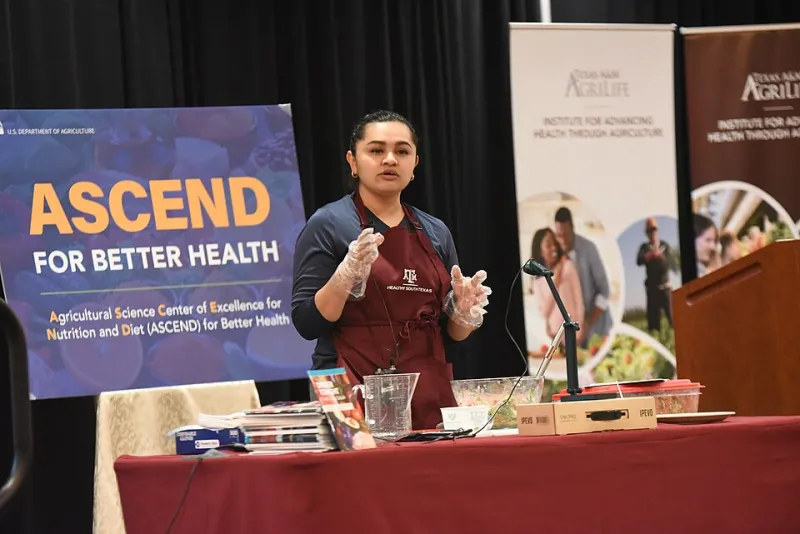
Photo: USDAgov, Public domain, via Wikimedia Commons
The best recipe I have been given in Bristol was not written down. It was a sentence, delivered halfway up a stairwell, by a neighbour holding a bag of red lentils. 'Fry the onion properly,' she said. 'Then the cumin. Then the lentils. Then enough water to cover them by a thumb. Don't rush the onion.' I have made it a dozen times since, and it has never cost me more than about 40p a portion.
That is not a quirky anecdote. It is a piece of food infrastructure. In a city where budgets are tight and waste is high, the knowledge in people's heads is doing work that no recipe app is doing. It just does not show up in the metrics.
The recipe that never got written down
Community recipe exchanges are not a new idea. They happen in church halls, libraries, community centres, co-op shops and family WhatsApp groups. They are usually informal, often multilingual, and almost never funded. Someone brings a pot of something. Someone else asks how it was made. A cook who has been stretching the same ingredients for thirty years says: use the heel of the bread, not just the slices; put the carrot tops in if they are fresh; add a spoon of yoghurt at the end if you have it.
This is not nostalgia. It is practical economics. The glossy recipe blog assumes you will buy a bunch of herbs for one dish and throw the rest away. The everyday cook assumes the opposite. The everyday cook is usually right.
Three recipes, costed at November 2026 prices
These are not precision restaurant costings. They are the rough arithmetic of a local shop, the kind of sums people do in their heads while standing in the aisle. Prices will vary, but the shape of the thing holds.
Red lentil and carrot soup
500g red lentils, about £1.20. Four carrots, maybe 40p. Two onions, 30p. A stock cube, 15p. A teaspoon of cumin, a splash of oil, salt. Water. This makes six to eight generous portions. That is roughly 30p to 40p a bowl, depending on how generous you are with the lentils. It freezes. It thickens. It takes about 25 minutes if you get the onion going properly.
Sunday rice with whatever is there
A kilogram of rice, around £1.10. A bag of frozen peas, £1. An onion, 15p. A tin of chickpeas, 65p. Spices, oil, salt. If there is leftover chicken or a tired pepper, it goes in. This makes four to six portions at about 60p to 75p each. The point is not the exact number. The point is that the rice absorbs whatever is left in the fridge, which is how a Sunday dinner becomes a Monday lunch.
Bread pudding from the stale loaf
Stale bread is not a problem to be solved by the bin. It is the start of pudding. Bread, milk, sugar, dried fruit if you have it, cinnamon if you like it. The bread is free if it was going stale anyway, or maybe 50p from a reduced shelf. The milk is 30p. The whole thing makes six portions for around 25p each. It is not a health food. It is a good dinner when the week has been long.
Why sharing recipes is waste policy too
The environmental case is obvious once you say it out loud. Every recipe that uses the heel of the loaf, the bendy carrot, the half tin of beans and the last spoon of yoghurt is a recipe that keeps food out of the bin. Community fridges and surplus food projects do vital work, but they are often solving a problem at the end of the line. Recipe knowledge solves it earlier, in the kitchen, before the food becomes surplus.
There is a budget case too. The cheapest way to eat well is usually not to buy a different ingredient. It is to know what to do with the one you already have. That knowledge is not evenly distributed, and it is not always written down. When it is shared, it multiplies. Nobody loses a recipe by giving it away.
Treat the everyday cook as an expert
Food-justice work often funds buildings, vans and cold rooms. All of that matters. But it should also fund the people who know how to turn a bag of lentils into a week of dinners. That might mean paying community cooks to run sessions, printing recipe zines in several languages, or simply giving a community centre the budget to put the heating on and the kettle on at the same time.
It also means being honest about expertise. The person who has fed a family on a tight budget for twenty years knows something that a policy report does not. They know which shop reduces what, and when. They know how to make a little meat go further. They know that dignity is not a garnish.
The cheapest dinner in Bristol is already in someone's head. The work is to make sure it gets passed on, and that the people doing the passing on are treated as part of the food system, not as a nice extra. Good food, fair prices, shared power. That starts with a saucepan and a conversation.