A Fiver Each Way: The Bus Fare Hidden in Bristol's Food Deserts
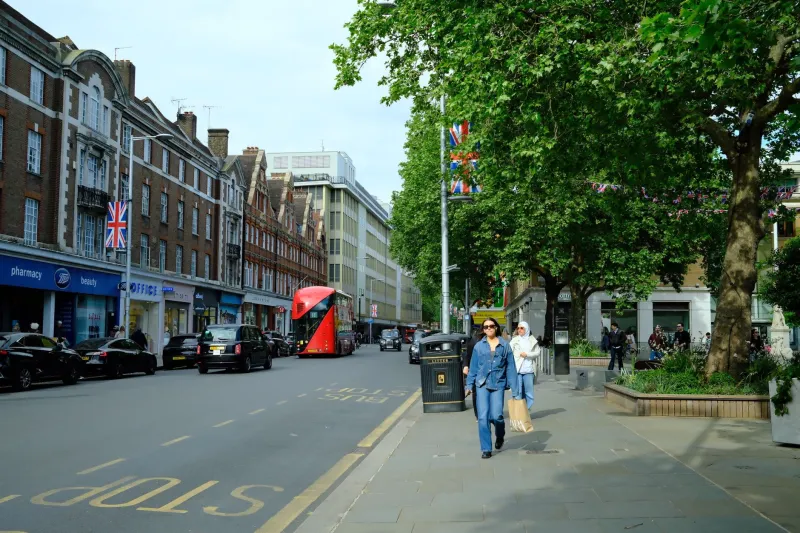
Bristol is not short of food. That is the first thing to say, because the phrase 'food desert' can sound like a landscape with nothing in it. Walk through the city centre or down Gloucester Road and you can buy olives, sourdough, three kinds of kale and a £7 sandwich without breaking stride. But access is not the same as proximity. A shop two miles away can be further than a shop across the city if the bus costs a fiver return and turns up twice an hour. In 2026, that fare belongs in the grocery bill.
The map that starts at the bus stop
Most food-desert maps count supermarkets per postcode. That is a useful start, but it misses the outer estates where the nearest large shop is not walkable, the bus is infrequent, and the return journey eats into the money set aside for actual food. A household on a tight budget does not experience distance in miles. It experiences distance in minutes, waits, luggage and fare.
So a more honest map would ask a different question: can you get to affordable food and back within half an hour, carrying what you need, without spending more than a small fraction of your basket? On that measure, parts of Hartcliffe, Withywood, Lawrence Weston and Stockwood look less like places with no food and more like places where food is financially further away than it looks.
A £30 basket is not unusual for a small family. Add a £5 return bus fare and the real cost is £35. That is a 17 per cent surcharge for the crime of living further out. Do that twice a week and you have spent £40 a month simply getting the shopping home. That is not a rounding error. That is a bag of groceries.
What the fare does to the basket
This is the part that gets lost in tidy policy language. A supermarket own-brand item may be cheaper in Bedminster than in a local convenience store, but the saving disappears if it costs £5 to reach it. The 'poverty premium' is not just about payday loans and prepayment meters. It is also about bus fares, taxi rides for heavy bags, and the time lost waiting for a connection that may not come.
For a pensioner carrying a 5kg bag of potatoes, the calculation is even sharper. For a parent with a pushchair and a toddler, a two-bus journey can be a non-starter. For someone working shifts, the shop may be open but the bus may not be running when they finish. The food system assumes a car, a nearby shop and free time. Plenty of Bristol households have none of those things.
Three estates, three arithmetic problems
In Lawrence Weston, the issue is not that there is nothing nearby. It is that the range and prices in smaller shops do not always stretch to a full weekly shop, so people travel for the big basics. In Hartcliffe and Withywood, the community networks are strong, but the journey to a large supermarket can mean a bus, a wait and a heavy carry home. In Stockwood, the hill and the bus frequency do their own quiet work on the decision about whether to make the trip at all.
The details differ, but the shape is the same. Access is a function of transport, not just retail. If you build a map that ignores the bus timetable, you will misdiagnose the problem. You will conclude that people should simply shop around. They already do. That is the problem.
The community shops doing the maths
The people running community shops and co-op projects on Bristol's edges do not tend to use the phrase 'food desert'. They talk about the 4pm bus, the missed connection, the price of a cab when the bags are too heavy, and the difference between a shop that is technically open and one that is practically reachable.
One organiser at a community-run shop in the north-west of the city told me that the fix is not another food bank. It is a shop you can walk to, with prices that do not punish you for buying a smaller basket. That means wholesale access, decent cold storage, and rent that does not assume a city-centre footfall. It also means treating community shops as food infrastructure, not as plucky little extras.
Co-operative grocery models matter here because they can keep the shop accountable to the people using it. But they cannot solve transport on their own. A brilliant shop at the bottom of a hill is still a long way up if you have a bad knee and no bus.
What would actually fix access
There is no single lever. But there are several that would move the needle. Bus routes could be planned with food access as an explicit criterion, not an afterthought. Fare rebates for essential shopping, or simpler flat fares for short cross-city trips, would help. Community-owned shops need support with wholesale supply, storage and staffing, not just one-off grants. Delivery co-ops for heavy staples could take the weight off individual journeys. And planning policy should protect small retail space on estates instead of treating it as land waiting for a better offer.
As the region's bus network is reshaped, this is the moment to say that a food desert is not just a postcode with no supermarket. It is a place where the timetable and the ticket price decide what is for dinner. The map should be drawn with a clock and a bus fare in hand.
Here at Bristol Food Union, we care about good food at fair prices. That has to include the price of getting to it. A city that can afford the food but not the fare has not solved access. It has just moved the problem to the bus stop.