Route Density and Cold Starts: The Real Arithmetic of Bristol's Mobile Grocery Vans
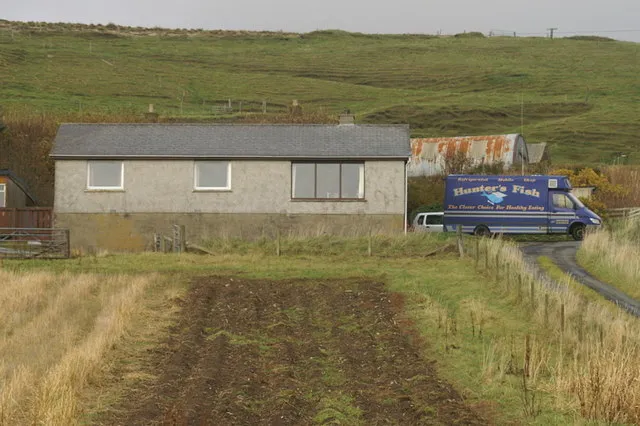
Photo: Mike Pennington, CC BY-SA 2.0, via Wikimedia Commons
On a wet Tuesday morning in Knowle West, a white Transit with a hand-painted sign pulls into a cul-de-sac. The back doors open. There are potatoes in paper sacks, bananas that have seen better days but are priced accordingly, tins of tomatoes, a crate of onions, and a queue of about nine people who knew the van would be there because it is always there. The nearest big supermarket is a bus ride and a carry home. This is not a cute throwback to the milk round. It is a grocery route, and it is doing a job that the retail map has quietly given up on.
You can see the same pattern in Hartcliffe, Lawrence Weston and parts of Bedminster. A mobile greengrocer, a community-run shop van, an electric milk float doing a modern round with bread and eggs alongside the pintas. Some are private businesses. Some are attached to community organisations. Some are barely breaking even and are kept going by a driver who knows exactly which block of flats has the pensioner who cannot carry a bag up three flights. The question is whether Bristol treats these routes as a stopgap or as permanent last-mile infrastructure. The answer will be decided by arithmetic, not sentiment.
The route is the product
A shop waits for people to come to it. A van has to go to the people, which means the timetable is the shopfront. That changes everything. A fixed shop can absorb a quiet hour. A van cannot. Every stop has a cost: fuel to get there, time to park, time to serve, time to pack up. A route with too many stops and too few customers per stop is a charity run with a diesel habit.
In mobile retail, route density is the lever. It is not enough to visit an estate. You need enough regular customers in a tight geography to make the stop worthwhile. A route that serves 50 customers across 20 stops is a different business from one that serves 70 customers across 14 stops. Same estate, different maths. This is why some vans cluster around known pickup points, why they work with tenants' groups to advertise the timetable, and why a school gate or a community centre can make or break a round.
The back-of-envelope
Let us build a rough model, not an audited account. Say a van does 20 stops in a day, serves 50 customers and takes an average basket of £12. That is £600 in sales. If the cost of goods is around 60%, gross profit is £240. Now subtract the route: fuel at £45, a driver at £15 an hour for seven hours at £105, van lease and maintenance at £60, pitch or parking fees at £20, shrink and wastage at £30, and depot, insurance and admin at £50. That is £310 of route costs against £240 of gross profit. The day loses £70.
To break even, that route needs either 65 customers at the same basket, a slightly higher basket, or lower costs. None of those are impossible. But they show why mobile grocery is not a licence to print money. The margin is thin, and it is thinnest exactly where the need is greatest. A shop in a wealthy postcode can lean on footfall and higher baskets. A van in Knowle West is often doing the opposite: smaller baskets, more stops, more time per customer, more cash handling, more no-shows on a rainy day.
Winter is not just higher fuel
Cold weather changes the route in ways that a spreadsheet often misses. Diesel vans idle to keep the cab warm. Electric vans lose range, which can mean fewer stops or a midday charge. Produce gets damaged by cold, so shrink rises. Drivers get sick, and a single absence can cancel a round. Customers stay indoors. The January basket gets smaller just as the fuel bill gets bigger.
This is the point where mobile routes quietly retreat. A private operator cuts the least profitable stops first, and those stops are usually the ones furthest from the depot or with the lowest average spend. That is rational for the business and disastrous for the estate. If Bristol wants these routes to survive the winter of 2026 without jacking up prices on the people they serve, the funding model has to smooth the seasonal dip rather than dump it on the poorest basket.
Franchise or public scaffold?
There are two obvious models. The first is a franchise: a shared depot, a central buying group, a common brand, training, a route-planning app, and a capped markup on staple goods. The franchisee gets bulk prices and back-office support. The parent organisation gets a route network without owning every van. The risk is that franchise fees and standardised baskets push the offer upmarket. A franchise that needs £18 average baskets to work is not serving the same estates.
A model that does not charge the estate extra
The second model is a council-backed or cooperative scaffold. That could mean a council-owned depot with secure parking and charging, route subsidies tied to food-desert postcodes, parking waivers at community centres, a fuel card, and small capital grants for electric vans. It could mean a cooperative that lets regular customers pre-order and pay weekly, with a members' fund to cover the gap for people who cannot. It could mean cross-subsidy: wealthier routes in Redland or Clifton helping to carry the cost of the Hartcliffe round, with transparent accounts so everyone can see it.
The important principle is simple. The last mile should not be paid for by the people who already have the least. If a mobile route is cheaper than a taxi to the supermarket and more reliable than a bus, that is a public good. It should be funded like one, at least in part. That does not mean endless subsidy. It means route contracts that reward density, affordability and reliability, not just the lowest bid.
What would make it permanent
A permanent mobile grocery network in Bristol would need a few unglamorous things: a shared depot near the routes, a buying group that can match supermarket prices on staples, a route-planning standard that clusters stops, a winter fund, and governance that includes drivers and customers. It would need pitch fees that reflect the value of the service rather than the cost of a parking bay. And it would need honest basket pricing, so a bag of potatoes is not quietly paying for the van's depreciation.
The van that comes on Tuesday is not a charming exception to the food system. It is a test of whether Bristol is willing to build the last mile into its food infrastructure. If these routes disappear, people do not just lose a shop. They lose a timetable, a bit of company, and the knowledge that someone is coming. That is worth more than the margin suggests, and it is worth planning for.