The Co-op Question: Can Bristol's Member-Owned Shops Grow Without Becoming Just Another Aisle
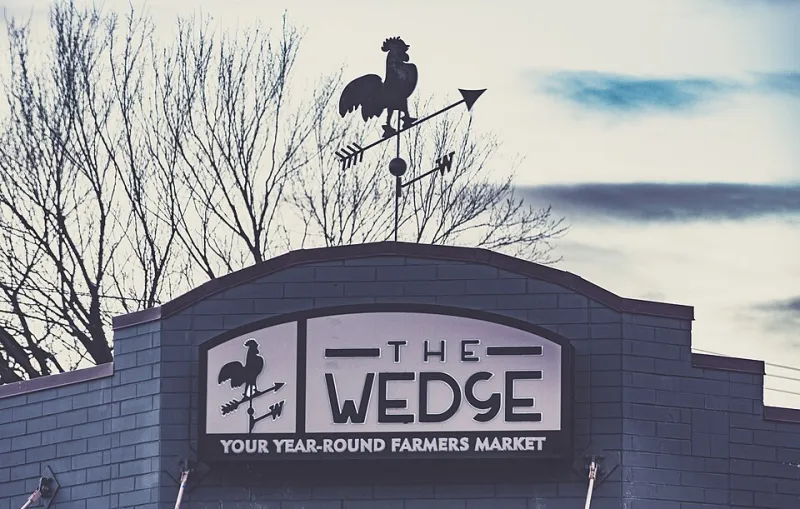
Photo: Tony Webster from Minneapolis, Minnesota, United States, CC BY-SA 2.0, via Wikimedia Commons
Bristol loves a co-op. We love the idea of it — the hand-painted sign, the member rota, the promise that nobody is getting rich off your weekly shop. But in 2026, love is not a business plan. Energy bills are still stupid, supermarkets are still using loss leaders like a weapon, and the member-owned grocery down the road is being asked to grow, stay affordable and keep every member at the table. That is not a small ask.
I have spent the past few weeks talking to organisers at member-owned shops and buying groups around the city. Nobody wanted to be named as the person saying the quiet part out loud, which tells you something. The quiet part is this: co-ops are brilliant at democracy and terrible at scale, and the next year will decide whether shared power is a governance model or a lovely slogan on a tote bag.
The growth trap
The standard growth story goes like this. A buying group starts in someone's front room. It gets a shop. It gets a board. It gets a part-time paid coordinator. Then the coordinator burns out, the fridge breaks, the lease goes up, and the shop either shrinks back to a buying group or tries to become a small supermarket. The small supermarket needs volume. Volume needs price. Price needs deals. Deals need a buyer with clout. And clout is exactly what a single shop on a side street does not have.
One organiser in East Bristol put it plainly: 'We can be cheaper than the supermarket on lentils and more expensive on everything else. That is not a niche. That is a hostage situation.' She is not wrong. The co-op model is supposed to offer an alternative to supermarket power, but if the only people who can afford the alternative are people who were already comfortable, then the alternative is not doing its job.
Governance is not a vibe
There is a tendency in co-op land to treat governance as a spiritual practice. Consensus, circle meetings, open books, a board that looks like the membership. All good. But governance is also a set of hard decisions about money. Who sets prices? Who decides whether to stock the cheap pasta or the organic pasta? Who gets paid, and how much? Who carries the risk if the shop closes?
The co-ops that seem to be surviving are the ones that have stopped pretending these are separate questions. They run open-book sessions where members see the margins. They pay their coordinators properly, which means the role does not depend on a saint. They use community shares not as a cute crowdfunder but as a real financing tool, with a clear repayment plan and a membership that understands what it is buying. And they federate. They share buying, back-office systems, training and deliveries with other co-ops. Essential Trading in Fishponds has been doing the wholesale side for years; the next step is for shops to act like a network rather than a collection of heroic little islands.
The scale question
Can Bristol's co-op groceries scale in 2026? Yes, but probably not by opening ten shops that all look the same. The model that makes sense is a federation: one shared buying and logistics operation, many small storefronts, and a member assembly that sets the principles rather than micromanaging the kale order. Think less chain and more common market. The co-op movement already has the language for this. It just needs the boring infrastructure.
Financing is the pinch point. Community shares are great until you need to repay them. Grants are great until they run out. Loans are great until interest rates do what interest rates do. The honest answer is that growth will be slower than the supermarket model and that is fine, as long as slower does not mean only in wealthy neighbourhoods. If shared power means anything, it means cross-subsidy: the shop in the affluent area helps the buying group in the estate, not the other way round.
What shared power must mean
Here is my argument. Shared power is not a member discount card. It is not a monthly newsletter. It is not a board that meets in a room above the shop. Shared power is when members can see the accounts, influence the prices, hire and fire the board, and decide what the shop is for. It is when the person on the till is paid enough to stay. It is when the co-op says no to a supplier because the supplier treats its workers badly, even if the margins are worse. It is when the co-op opens in the neighbourhood that needs it, not just the one that can afford the organic olive oil.
That is harder than scaling. It is also the only reason to bother. Bristol's co-op groceries do not need to beat Tesco at Tesco's game. They need to prove that a shop can be owned by the people who use it, run for the people who need it, and honest about the fact that cheap food and fair pay are not opposites — they are the same argument.
If you are a member of a co-op, go to the next general meeting. Ask about the margins. Ask who is paid what. Ask what happens if the lease goes up. If you are not a member, join one. Not because it is cute. Because it is the closest thing we have got to a shop that answers to the people in it.