The Minimum Spend Is a Means Test: Poverty-Proofing Bristol’s Co-op Membership
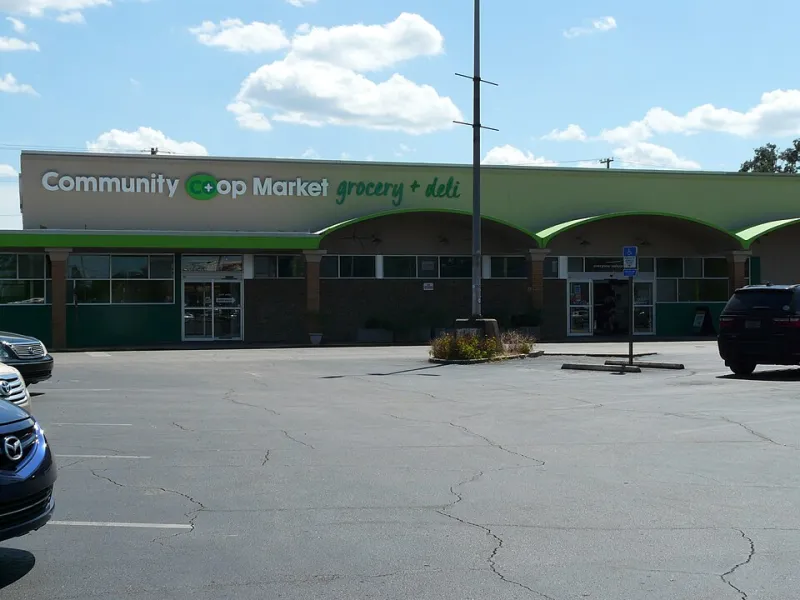
Photo: The Bushranger, CC BY-SA 4.0, via Wikimedia Commons
Walk into a co-op grocery in Bristol and the signage is usually warm: member prices, bulk-buy savings, points that add up to something later. The idea is good. The trouble is that a lot of these offers are designed like a loyalty scheme from a supermarket, not like a discount for a neighbour who is down to their last tenner.
If a member deal says spend £20 and save, it is not helping the household that has £12 until Friday. If it says buy three and get one free, it is not helping the person who can only buy one. If it says scan the app and collect points, it is not helping the shopper without a smartphone, a charger, or the data to load the thing at the till. In 2026, as Bristol’s co-op grocery scene keeps growing, this is the design question that matters: who does the membership actually member?
The reverse means test
Most poverty-proofing work asks whether a service is easy for people on low incomes to use. A membership discount often does the opposite. It quietly means-tests people by cash flow. The household with £80 in the bank can spend £20 to unlock a member price. The household with £8 cannot, so it pays the higher unit price and subsidises the saving for the better-off. That is not a co-op difference. That is a supermarket loyalty scheme in a nicer jumper.
Points make the same problem worse. Points are deferred cash. You have to spend first, wait, and then remember to redeem. For people managing a weekly budget in cash, or juggling prepayment meters and school costs, a point is not a discount. It is a promise that may never be kept. And once you add app-only offers, digital exclusion gets baked into the price of oats.
This is not an argument against member benefits. It is an argument for designing them from the bottom of the income scale upwards. A discount that only works if you can afford to reach it is not a discount. It is a gate with a nice font.
A poverty-proofing checklist for Bristol co-ops
Try running a member offer through these questions before it goes on the shelf.
1. Does it apply from the first pound? If the saving only kicks in after a minimum spend, it fails. A member price on a single tin of tomatoes is worth more to a household on a tight budget than 15% off a £30 basket.
2. Does it work in cash, without a smartphone? Paper tokens, a physical membership card, or a till button that any staff member can press are not old-fashioned. They are accessibility infrastructure. If the offer needs an app, it needs a non-app route that is just as easy.
3. Does it avoid upfront lump sums? Bulk-buy savings can be brilliant for a family with a freezer and terrible for someone in a bedsit with a mini-fridge. Co-ops can offer split cases, shared bulk buys, or a ‘buy one now, add to a community crate’ option. The saving should not depend on storage you do not have.
4. Does it survive a bad week? Memberships that lapse after a missed payment or a gap in shopping punish people for being skint. A poverty-proofed membership has a pause option, no punitive reactivation fee, and a reminder that sounds like a person, not a debt collector.
5. Can someone shop for you? Illness, disability, caring duties and shift work all mean the member is not always the person at the till. A nominated shopper or a household card is basic inclusion, not a loophole.
6. Is the best discount on the basics? A member deal on expensive cheese is lovely. A member deal on bread, milk, rice, pulses, tinned veg and cooking oil is justice. Co-ops should publish which staples carry the deepest member price and report on it at member meetings.
What good looks like in a Bristol shop
There is no single model, but a genuinely inclusive membership would probably have a few moving parts. First, a universal low price on a small basket of essentials — not a member-only price, just a fair shelf price everyone can access. Second, a flat member discount that applies from the first item, with no minimum spend and no app requirement. Third, an optional solidarity rate: members who can afford it pay a little more into a fund that tops up the discount for members who cannot. That is not charity. It is the co-op principle of members supporting members, with dignity and no forms at the till.
Bristol already has the right instincts. The city’s food projects are good at mutual aid, good at surplus, good at knowing that a queue is not a community. Co-op groceries can borrow that knowledge. Put a paper token in the till drawer. Train staff to apply the member price without a lecture. Let people join for a pound and stay joined when they cannot shop for a month. Publish a simple annual report: how much member discount went to households spending under £15 a week? If the answer is ‘not much’, the scheme needs work.
The co-op question, again
Member-owned shops are not just small supermarkets with a nicer constitution. They are places where the people who use them get a say. That means the discount design is not a technical detail for the back office. It is a democratic question. At the next member meeting, ask what the minimum spend is doing. Ask who it excludes. Ask whether the loyalty scheme would survive if the poorest member designed it.
A poverty-proofed membership is not about being generous. It is about being honest. If a co-op grocery says it is for everyone in Bristol, the price tag should not quietly disagree. The discount should start at the first pound, work in cash, and treat a bad week as a fact of life rather than a failure of loyalty.