The Canteen Lever: Bristol's Public Pounds and the Local Food Test
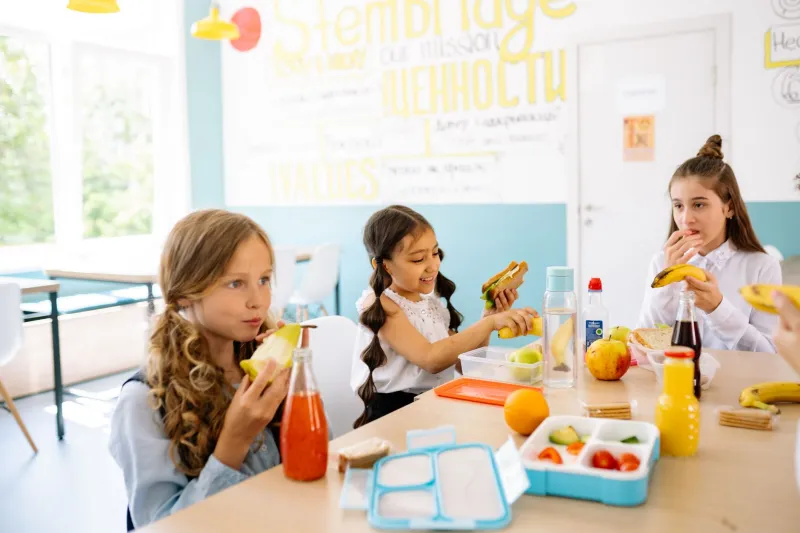
There's a quiet power in a public canteen. It sits inside a hospital, a university, a school, a council office. It feeds people who have no real choice about where to eat that day. And it spends money — not pocket change, but the kind of annual food bill that could, in theory, keep a cluster of local growers and co-ops in business.
That's the promise of anchor procurement. Bristol's hospitals, universities, schools and council catering services buy food at scale. They have public missions. They are rooted in the city. So why does so little of that spending land with Bristol's cooperative growers, small producers and surplus-food suppliers?
The answer isn't a single villain. It's a tangle of frameworks, budgets, contracts and the perfectly reasonable fear of a school business manager who does not want to explain why the carrots cost more this term.
The menu is a spreadsheet with a conscience
Public food procurement is often described as if it were a neutral administrative task. It isn't. Every contract is a choice about which supply chains get to exist. A hospital trust that buys everything through a national framework is not being apolitical; it is making a political decision about who gets the volume, who gets the risk, and who gets left out.
The problem is that the rules are not written for small, local and weird. They are written for predictable, auditable and cheap. That means a co-op with a dozen growers and a shared van can lose out to a distributor that can deliver the same frozen peas to eighteen sites before 7am. A surplus-food project with fluctuating stock can struggle to guarantee the volumes a public kitchen needs. A small producer may not have the paperwork, insurance or cash flow to wait sixty days for payment.
None of this is impossible to fix. But it does require admitting that "local food" is not a tick-box. It is a supply-chain redesign.
What the big buyers actually control
Anchor institutions control three things that matter enormously: volume, certainty and legitimacy.
Volume is obvious. If a university commits to buying a share of its vegetables from a Bristol co-op, that co-op can plan, hire and invest. Certainty matters just as much. A three-year contract is a different animal from a one-off order for a conference lunch. And legitimacy is the underrated one. When a public institution says it wants to buy food that supports fair wages, local growers and surplus redistribution, it gives cover to other buyers to do the same.
The catch is that public kitchens are not free agents. They answer to finance directors, dietitians, facilities managers and, ultimately, the public. They cannot simply wave a magic wand and redirect the entire food budget to a nearby market garden. They have to meet nutritional standards, allergen rules, delivery windows and budget targets. Any serious food-justice argument has to start there, not in a fantasy where procurement officers are just being lazy.
The budget pressure is real — and so is the opportunity
Let's be honest: public sector catering budgets are tight. Schools are balancing staffing, energy and food costs. Hospitals are trying to feed people well while managing waste and clinical requirements. Councils are staring at another year of difficult choices. A local food strategy that ignores cost will be ignored.
But cost is not only the sticker price. It is also the cost of a supply chain that extracts value from the city and sends it elsewhere. It is the cost of a catering contract that leaves local growers unable to scale. It is the cost of emergency food parcels when wages and prices don't meet. Procurement can't solve all of that, but it can stop making it worse.
One practical route is to split contracts. Instead of asking one supplier to provide everything, public kitchens can carve out lots for fresh produce, bakery, dairy or surplus-based products. Smaller lots are more accessible to co-ops and small producers. Another route is to use a local intermediary — a food hub or co-operative distributor — that can aggregate supply, handle invoicing and take on some of the administrative burden. That's not a purity test; it's infrastructure.
The surplus question
Surplus food has a role, but it is not a substitute for fair procurement. Public kitchens can and should use surplus where it is safe, predictable and dignified. But a hospital cannot run its patient menu on whatever happens to be left over. The point is to build surplus into a planned system — a steady stream of ingredients that supplements, rather than replaces, a fair supply chain.
That means investing in cold storage, processing and logistics. It means paying surplus projects properly for the work they do. And it means being honest about the difference between a food-justice strategy and a bin-diving strategy.
What would it take?
The city already has the ingredients for a better approach: cooperative groceries, growers, surplus projects, public institutions with missions, and a council that has talked a good game on the right to food. What it needs now is the unglamorous work.
Publish the food spend. Set local and ethical procurement targets that are specific enough to be measured. Train catering managers on what is actually possible under the rules. Pay small suppliers on time. Fund the food hubs and co-ops that make local sourcing practical. And build a shared definition of "good food" that includes workers' rights, environmental impact and community benefit — not just price per kilo.
The canteen lever is not a magic bullet. But it is one of the few places where public money, public mission and daily eating meet. Bristol should pull it.
If we can get the public plate right, we don't just feed people. We build a market for the kind of food system we say we want.