The Debt at the End of the Table: Bristol's School Lunch Queue and the Cost of Being Seen
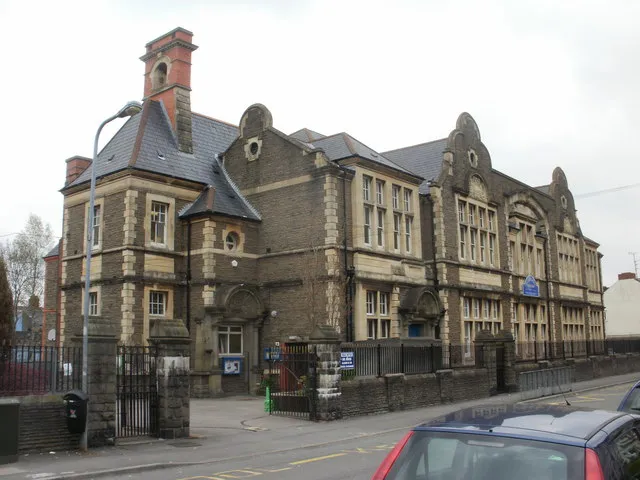
Photo: John Grayson, CC BY-SA 2.0, via Wikimedia Commons
At 12.07 on a Tuesday, a primary school hall in Easton does the thing that school halls do: it gets loud. Trays clatter. A dinner lady calls out an allergy. Somewhere near the back, a child puts a card on a reader and watches a small screen. The screen says something. The child puts the card away. They do not join the queue.
That moment is what school meal debt actually looks like. Not a spreadsheet. Not a council press release. A kid doing arithmetic with their feet.
The arrears are only half the story
School meal debt accumulates quietly in Bristol households. A parent tops up an online account when they can. A payment fails. A low-balance email lands in an inbox already full of rent reminders and energy notices. The school keeps serving lunch, because most schools do. The debt grows by two or three pounds a day until it becomes a number that feels impossible to say out loud.
But the arrears are only half the story. The other half is the architecture of shame that grows around them: the separate queue for children whose accounts are in credit, the red tray, the card that beeps differently, the receptionist who asks a seven-year-old to tell their mum to check the app. None of these things are inevitable. They are design choices. And design choices can be unmade.
I have changed names in what follows, but the pattern is familiar to anyone who has spent time in a Bristol school office. A mum in Hartcliffe describes getting a text at work saying her child's lunch account was in arrears. She couldn't leave to sort it. Her son, aged nine, told her later that he had said he wasn't hungry. He had been hungry. He just didn't want to be the child whose tray was different.
Debt is a household symptom, not a character flaw
It is tempting to treat school meal debt as a budgeting problem. It is not. It is a wages problem, a housing problem, a benefits problem and a transport problem, all arriving at the school gate at 8.45am. If your rent has gone up and your bus fare has gone up and your weekly shop has gone up, the lunch account is one of the few bills you can delay without a bailiff. That is not irresponsibility. That is triage.
Free school meals are a means-tested entitlement, which means the system is built to sort children into entitled and not entitled. But hunger does not read the eligibility criteria. A child whose family earns just above the threshold is still a child who may not have had breakfast. A child with no recourse to public funds is still a child. A child whose parent has just lost a job is still a child. The means test is a line drawn through the middle of a classroom.
This is why the argument for universal free school meals is not just an argument about money. It is an argument about belonging. A universal plate says: lunch is part of school, like assembly or PE or being told off for running in the corridor. It is not a benefit. It is not a favour. It is a public service.
The separate queue is a policy choice
Some schools in Bristol already do this well. They do not announce debts to children. They do not use different trays. They let a child eat and then sort the money with the adult who is responsible for it. They train office staff to have quiet conversations. They use cashless systems with discretion, not as a public scoreboard.
Other schools are caught in a bind. Catering contracts have to balance. Budgets are tight. A school business manager told me that the debt is 'not huge in the scheme of things, but it is huge to the family'. That is the right way to see it. A hundred pounds of arrears is a rounding error to a local authority. To a parent on a prepayment meter, it is a crisis with a child attached.
Bristol City Council and the city's academy trusts should not leave this to individual headteachers. We need a clear, non-stigmatising school meal debt policy across the city: no child identified as a debtor in front of their peers, no withholding of lunch as a debt collection tactic, no low-balance alerts sent to pupils, and a written-off or ring-fenced hardship pot for families who cannot pay. That is not radical. It is just decent.
Procurement is part of the plate
There is another lever, and it is sitting in the catering contract. Bristol spends serious money on school meals. That money can be used to buy better food, support local suppliers and ensure catering staff are paid properly. It can also be used to keep costs down by buying the cheapest possible protein and calling it a hot meal. The two approaches produce very different lunchtimes.
A food-justice approach to school meals would set quality standards alongside cost standards. It would ask whether the food is nutritious, whether it is culturally appropriate, whether children actually eat it, and whether the people cooking it have secure hours and a liveable wage. It would also ask whether the contract makes it easy for schools to stop using shame as a debt-management tool.
A 2026 test for Bristol's lunchtime
So here is a practical test for this academic year. First: can every child in a Bristol school eat lunch without being visibly marked as a debtor? Second: will the city and its academy trusts publish a non-stigmatising debt policy, with a hardship fund and no lunch withheld? Third: will Bristol back a universal free school meal pilot, starting with the schools where need is highest, and use procurement to make that plate good?
None of this is fantasy. It is a set of choices. The red tray is a choice. The separate queue is a choice. The low-balance text sent to a nine-year-old's card is a choice. So is the shared plate.
At Bristol Food Union, we believe good food is not a reward for good behaviour or a prize for the right income. It is the baseline. A school lunch should be the one part of a child's day where the ledger is closed, the queue is shared and nobody has to pretend they are not hungry. That is not just better policy. It is a better lunchtime.