Loose Change and Hot Plates: The Honest Arithmetic of Bristol's Pay-As-You-Feel Cafés
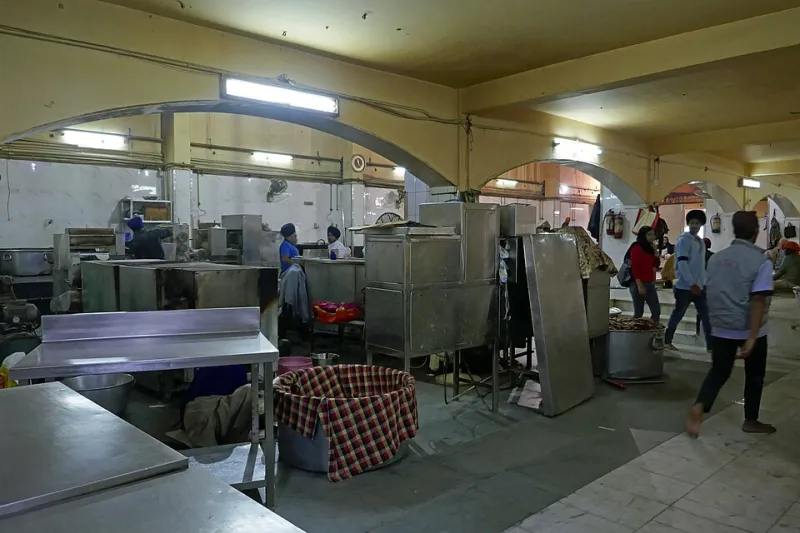
Photo: Ji-Elle, CC BY-SA 4.0, via Wikimedia Commons
There's a jar by the till in a handful of Bristol kitchens that does more work than most marketing departments. It holds whatever people feel able to put in it. Around it sits a hot meal, a table you're allowed to linger at, and a house rule that nobody asks you why you're here.
Pay-as-you-feel is often described as a gimmick or a nice gesture. It's neither. It's a pricing model with a set of genuinely difficult sums behind it — and, done properly, it's one of the more interesting pieces of food infrastructure in the city.
Three mechanisms, one principle
Most of the places doing this in Bristol work one of three ways, and plenty blend them.
Suggested donation. A menu with no fixed prices but a line encouraging you to give what you can — say £4, £8, £12. You choose. Nobody counts your coins at the counter.
Pay-what-you-can with a floor of zero. The price is genuinely optional, including the option of paying nothing at all. This is the version that makes funders nervous and, in practice, the one that works best for people on the sharpest edges.
Suspended meals. A spin on the Neapolitan caffè sospeso: you buy a meal you don't eat, and someone else claims it later. Sometimes tracked with a stack of paper tokens, sometimes just a line in a notebook, occasionally a whiteboard number that gets rubbed out and rewritten through the day.
What these share is a refusal to sort people into worthy and unworthy. That refusal is the whole point. The moment you ask for proof of hardship, you've built a benefit office with better soup.
Five kitchens, five ways of doing it
You'll find these models scattered across the city. The venues change; the shapes are recognisable.
The Sunday lunch in a church hall. Long tables, a rota of volunteers, a pot of something that has been simmering since nine. Money goes in a tin on the way out, or doesn't. The strength is scale: a hall can feed eighty people for less per head than a café can feed twenty. The weakness is that it's Sunday, and it's a hall, and some people won't walk through that door.
The surplus-led lunch club on an industrial estate. Food arrives from shops and wholesalers in the morning; what turns up determines what's cooked. Brilliantly cheap per plate, wildly unpredictable. On a good week there's crates of peppers and a chef who knows what to do with them. On a bad week there's a lot of bread.
The high-street café with a jar by the till. Rent, rates, staff, gas — the full commercial stack, softened by a pay-as-you-feel policy at certain hours or on certain dishes. This is the hardest version to sustain, and the one that reaches people who would never go to a food project, because it looks like what it is: a café.
The co-op canteen. Member-owned, collectively run, often with a simpler idea of fairness — a flat low price for most, free for anyone who says so, no interrogation. Governance takes time; decisions take longer; the place tends to survive.
The community fridge kitchen. A fridge, a pantry, a hob and someone willing to turn a glut of courgettes into something people want to eat. Less a café than a weekly ritual, and often the closest thing to a neighbourhood living room that a housing estate has.
The sums nobody puts on the board
Strip away the goodwill and pay-as-you-feel is a cross-subsidy. Some people pay more than their plate costs; some pay less; some pay nothing. The model only balances if the top end of that curve is generous enough, and if the ingredients are cheap enough.
Ingredients are the bit surplus food solves, at least partly. Rent, energy, insurance, equipment and — crucially — somebody's paid hours are not solved by a crate of donated carrots. A kitchen running on volunteers can look affordable right up until the volunteer who does the ordering, the rota, the food-safety paperwork and the washing-up moves house.
The honest arithmetic most of these kitchens eventually land on looks roughly like this: the average plate needs to bring in a bit more than it costs to make, so that the people paying nothing are genuinely covered rather than quietly subsidised by a volunteer's unpaid labour. If your model only works because someone is working for free, it isn't a pricing model. It's a countdown.
That's why the better projects publish their numbers — not to shame anyone, but because a jar by the till works on trust, and trust needs transparency. Say out loud what a plate costs to make. Say what the average contribution is. Say what the gap is. People are far more generous when they can see the gap than when they're asked to believe in one.
The unwritten etiquette
There's a social code in these rooms that nobody writes down and everybody learns.
Don't comment on what anyone else pays, or doesn't. Don't ask why someone's here. Don't thank people for "coming in anyway" — the whole architecture is built so that using it isn't an admission. Take a second helping if there's a second helping. Wash your plate if there's a tub by the bin. If you can pay more than you need to, pay more, and don't make a thing of it.
And if you can afford to pay full price and you don't, that's between you and the jar. The model has no enforcement mechanism and doesn't want one, because the alternative — checking up on people — costs more in dignity than it recovers in cash.
Where it goes wrong
Three failure modes are worth naming.
Means-testing creep. A funder asks how you know the people you serve are "in need". Someone suggests a referral form. Six months later there's a clipboard at the door and the room has emptied out, because the people who most needed it were the least willing to be assessed.
Volunteer burnout dressed up as community spirit. Community is not a substitute for a rota with paid hours in it.
Surplus dependency. A kitchen built entirely around what the shops can't sell is a kitchen that's one supermarket policy change away from closing. The strongest projects grow some of their own, buy deliberately from local suppliers, and treat surplus as a bonus rather than a business plan.
How to copy it without making it a charity
If you're thinking of starting one, here's the short version.
Start with a room you can actually afford, not the room you dream about. Run it once a week for three months before you tell anyone it's permanent. Decide your floor — is it truly zero, and who pays when it is? Write down your etiquette on the wall so nobody has to guess. Publish your costs. Pay at least one person for the invisible work. And resist every pressure to sort your guests into deserving and not.
The point isn't free food. It's food that doesn't require you to prove you deserve it. Bristol's pay-as-you-feel kitchens are, at their best, a small working model of something bigger: a city where a hot meal is a normal thing to have, and the price of it is a conversation rather than a gate.