Words Worth Paying For: Bristol's Food-Justice Language Needs a Rewrite in 2026
Photo: Tony Webster from Minneapolis, Minnesota, United States, CC BY-SA 2.0, via Wikimedia Commons
There's a handwritten label I keep thinking about. It was stuck to a tub of red lentils in a member-owned grocery in Easton: CHEAP PROTEIN. The price was fair. The lentils were good. But the word did something to the room. A shopper picked up the tub, read the label, and put it back. Not because of the cost. Because 'cheap' had already made the decision for her: it told her she was buying a compromise.
I'm not naming the shop, because that label could have been in half a dozen places across Bristol. That's the point. Our co-op groceries, surplus projects and recipe pages are full of words that are meant to help and quietly do the opposite. In 2026, with food bills still biting and right-to-food promises still needing to become meals, we need to talk about the language as seriously as we talk about the cold chain.
Cheap is a price and a judgement
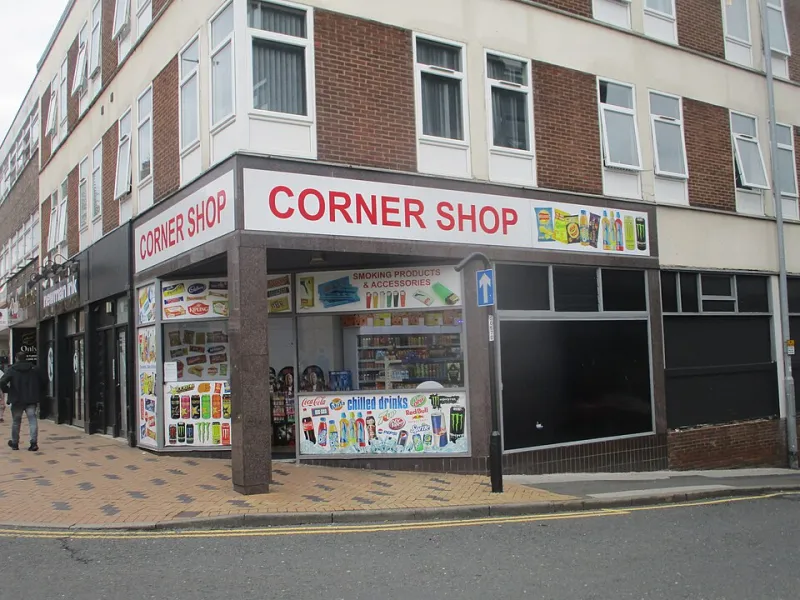
'Cheap' sounds like a fact. It isn't. It carries a second message: this is the lesser option, the apology shelf, the thing you buy because you can't buy the real thing. For someone already managing the daily sting of tight money, that message can be enough to keep them out. For a co-op trying to build member power, it undercuts the whole idea. Good food at a fair price is not a consolation prize. It's the plan.
'Budget' has a similar problem. It's a spreadsheet word. It makes dinner sound like homework. 'Low-cost' is clinical, like a line in a funding return. 'Affordable' is better, but it still begs the question: affordable to whom, and who gets to decide? None of these words are neutral. They are part of the shopfront.
What the words do on a shelf
Signage is where language meets hunger. A red marker saying CHEAP VEG BOX tells people the box is cheap. It doesn't tell them it's enough for three dinners, or that the carrots came from a farm just outside the city, or that the person at the till will not ask them why they're paying in coins. A label saying 'Veg box: £6, enough for three dinners' does more work. It names the price and the value. It treats the shopper as someone making a decision, not someone being sorted.
The same goes for surplus counters. 'Surplus' is industry language: it describes a supply-chain problem, not a neighbour's tea. 'Rescued food' is better, but it can sound heroic, as if the shopper should be grateful for the rescue. 'Spare food' is gentler. 'Food that would otherwise go to waste' is honest. The words should make it easier to walk up and ask, not harder.
A working vocabulary for 2026
This isn't about being polite. It's about power. The words we use decide who gets named as a member and who gets named as a case. Here are some swaps we can try this winter.
| Instead of | Try | Why |
|---|---|---|
| Cheap | Fairly priced / good food at a fair price | Names the relationship, not the quality |
| Budget | Everyday / stretch-friendly / for a tight week | Acknowledges reality without making it an identity |
| Low-cost protein | Beans and lentils: good protein, fair price | Says what it is, not what it isn't |
| Cheap veg box | Veg box: £6, enough for three dinners | Gives the shopper information, not a label |
| Food bank user | Shopper / member / neighbour / guest | Names the role, not the circumstance |
| Beneficiaries | Members / guests / people we cook with | Turns 'them' back into 'us' |
| Hard-to-reach communities | People our current hours don't reach | Puts the problem in the project, not the people |
| Vulnerable households | Households with less room to manoeuvre | Use 'vulnerable' only when a funder forces it |
| Cheap eats | Good food that costs less / everyday plates | Keeps the pleasure in the food |
Some of these swaps will feel clumsy at first. Good. Clumsy is better than careless. A funding bid can still say 'low-income households' if that is what the form demands. But it can also say 'members and neighbours on tighter budgets'. It can describe what people do, not just what they lack. It can say 'we' instead of 'they'.
Recipe titles are part of the welcome
Recipe pages are where food writing often gets this wrong. 'Cheap Monday tea' sounds like a punishment. 'Budget family dinner' sounds like a spreadsheet with gravy. A title can be honest about cost without making cost the whole story. 'Monday tea: beans, greens and toast' tells you what you're eating. 'A dinner for four with a fair price per head' tells you what it costs. 'A slow bean chilli for a cold week' tells you when to cook it. None of them ask the cook to apologise.
At Bristol Food Union, we're not pretending we've got this right. We've used 'cheap' in headlines. We've used 'budget' because it's a search term. This winter we're auditing our own recipe pages and signage language. We'll keep using 'affordable' sometimes, because it's useful, but we'll ask 'to whom?' before we do. We'll put cost per portion in the method, not the title. We'll write 'fairly priced' when we mean it, and we'll stop using 'cheap' as a shorthand for care.
The test is not accuracy. It's invitation.
Bristol has a right-to-food charter, a network of community fridges, co-op groceries trying to grow without becoming just another aisle, and surplus projects running on borrowed keys and cold mornings. The people doing that work are not short of commitment. But the language around the work can still make someone feel like a problem to be solved rather than a person to be served.
So here's the test for 2026: does the word invite? Does it make someone more likely to walk in, pick up the lentils, and ask a question? If not, it needs changing. The price was never the only barrier. The words on the label are part of the food too.