The Four-Person Bag in a One-Burner Room
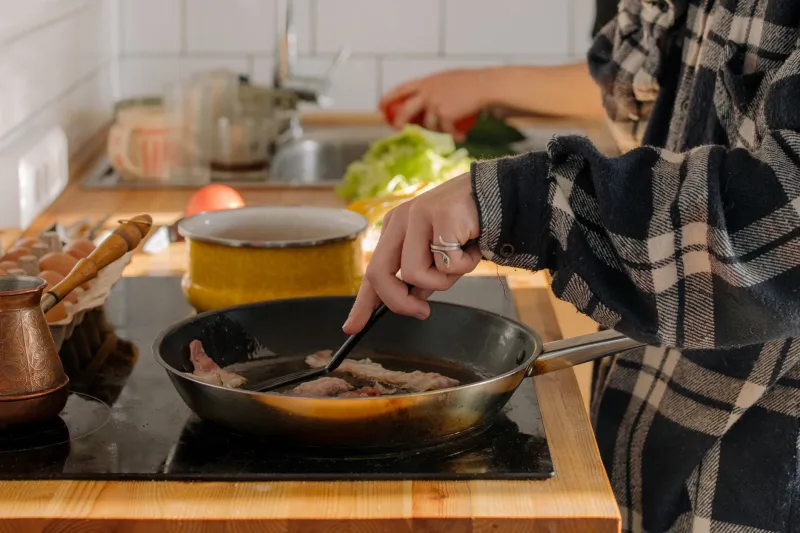
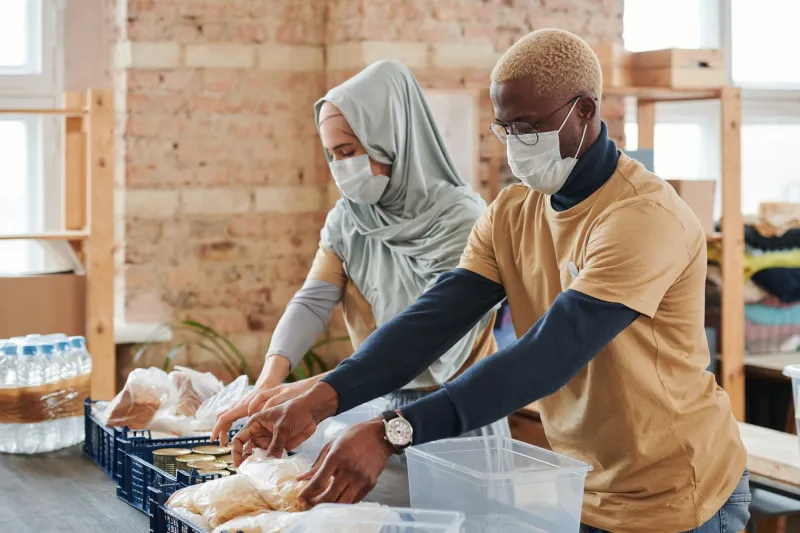
At a church hall just off Stapleton Road, the parcel comes across the table in a blue crate: a 2kg bag of rice, a family pack of pasta, four tins of beans, a catering-sized bag of carrots, and a recipe card for a bean chilli that serves four. The person taking it home lives in a bedsit in Easton. They have a two-ring hob, a kettle, a shared microwave down the hall, and a fridge shelf about the size of a shoebox. They will cook for one.
This is not a niche problem. Bristol's food parcels are often designed around an imagined household: two adults, two kids, a freezer, an oven, a car boot. The reality is more varied. Single-person households are a large and growing share of the city, and they include older people in sheltered housing, students in HMOs, people in temporary accommodation, and workers in bedsits where the kitchen is a plug-in hob. Food justice has to count these people, not just as recipients but as cooks.
The parcel has a household in mind
Food parcel design is a logistics discipline. Standardisation keeps costs down and speeds up packing. A family bag of rice is cheaper per kilo; a four-person recipe card is easier to print; a crate of identical parcels is easier to move. None of that is unreasonable. But standardisation quietly assumes a household. It assumes a cupboard, a freezer, a second pan, and someone else at the table.
If you cannot store a 2kg bag of rice, the cheapness is theoretical. If you have one saucepan, a four-person recipe is not a bargain; it is a week of the same meal or a bin full of leftovers. The parcel may be generous in calories and stingy in usable meals. That gap matters. A food parcel is not judged at the packing table. It is judged at the hob.
A kilo of rice is not a portion
Consider the practical life of a 2kg bag. It needs cupboard space, a way to keep it dry, and a pan big enough to cook a decent batch. Smaller portions cost more per kilo in shops, which is why bulk buying is often a false economy for people with no storage. But a parcel service can decant. It can offer a 500g bag alongside the 2kg sack. It can split a multipack of beans into singles. It can send a portion of pasta that makes two meals rather than six.
The point is not to hand out tiny, mean parcels. It is to make the same value usable. There is a difference between a parcel that is small and a parcel that is badly sized. One is a cut. The other is a design flaw.
Recipes are infrastructure
Recipe cards are usually an afterthought, printed by a volunteer and tested on a family table. But for a single cook, method matters. A recipe that says 'serve four' needs a scaling note, a storage note, and a realistic reheating note. It also needs to match equipment. A one-pot recipe is not just convenient; it is a way to avoid three pans and a wash-up. A microwave recipe is not lesser; it is appropriate. A no-cook recipe is not a cop-out; it is sometimes the only option.
Bristol's surplus food network already has the ingredients. What it often lacks is the translation layer: the bit that turns a crate of odds and ends into a meal someone can actually make after a shift, in a room with one ring and a shared kettle. That layer is not glamorous. It is a tested recipe card, a portion guide, and a note on what to do with half a cabbage.
What portion-aware actually means
A portion-aware parcel would not be a smaller parcel. It would be a smarter one. At referral, ask two questions: how many people are you cooking for, and what equipment do you have? Offer a choice of base units: a 500g rice bag plus a 1kg bag, rather than only the 2kg sack. Add a recipe leaflet with single-portion methods, freezing-free storage tips, and safe reheating. Where fresh food is available, offer a 'cook today' bag alongside an ambient bag. Let people choose. None of this requires a new warehouse; it requires a different packing list and a bit of trust.
There is a bigger point about power. Food parcels often treat people as mouths to be fed, not cooks with knowledge. Someone who has been cooking for one in a bedsit for three years knows more about portioning than most recipe writers. Involve single-person households in designing the parcel. Ask them what they threw away and why. That is food justice in practice, not a consultation exercise bolted on at the end.
The test for 2026
In 2026, Bristol's food network is under pressure from rising costs, colder weather and demand that does not let up. The temptation is to standardise harder: same crate, same contents, same recipe card. But a parcel that cannot be cooked is not a parcel. It is a cupboard problem passed to someone with no cupboard.
The fix is not to shrink generosity. It is to make generosity fit the kitchen it lands in. One pot, one person, one honest recipe card: that is a start. At Bristol Food Union, we would rather see a smaller bag of rice that gets eaten than a bigger one that goes stale on a shelf. Good food, fair prices, shared power. The parcel should carry all three.