The Caddy Doesn't Ask Questions: Bristol's New Food Waste Round and the Case for Checking First
Photo: Jaggery , CC BY-SA 2.0, via Wikimedia Commons
There's a particular sound to a Bristol terrace on collection morning. Not the lorry — that comes later, rattling down between the parked vans — but the softer clatter of caddy lids, five or six of them lined up along a low garden wall like small plastic parishioners. On my street in Easton they go out the night before, some of them still steaming faintly if someone's emptied a slow cooker at nine o'clock.
Since the spring, that ritual has been backed by law. Weekly food waste collections for households in England are now standard, part of the consistency framework that made separate food collections mandatory rather than optional. Bristol Waste runs the round; the caddies came with a little roll of liners and a leaflet that used the word "nutrients" twice on the first page. Everyone I've spoken to agrees on the headline: it's a good thing. Fewer bin bags sweating in the yard, less methane leaking out of a landfill somewhere off the M5.
But good infrastructure can still be pointed in the wrong direction, and this one has a blind spot the size of a loaf of bread.
What the round actually does
The system is admirably simple. Food in the caddy, caddy into the lorry, lorry to the anaerobic digestion plant, where the contents break down without oxygen and give up two things: biogas, which goes into the gas grid or a generator, and digestate, which comes back out as a fertiliser for farmland.
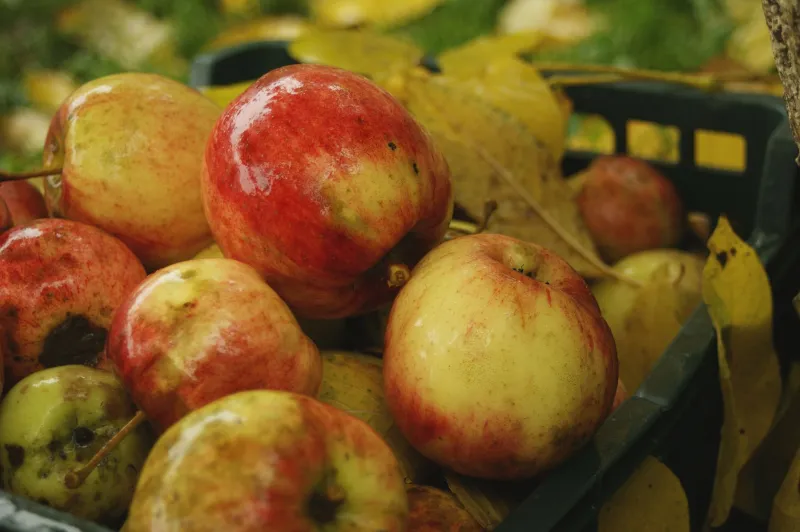
That's a genuinely decent outcome for a tea bag and a chicken carcass. It's a much less decent outcome for a bag of apples that were only slightly soft, and it's a frankly miserable outcome for the four pitta breads that got frozen together and then forgotten about at the back of the drawer.
Anaerobic digestion is the second-best thing you can do with food. It's not the first. The first is eating it, or getting it to someone who will.
The hierarchy nobody reads
The waste hierarchy is one of those documents that exists firmly on paper and only flickeringly in practice. Prevent, then redistribute, then feed to animals, then recycle, then recover energy, then dispose. Every council officer in the country can recite it. Almost none of them are resourced to act on the top two rungs, because prevention and redistribution aren't funded through the waste budget — they land on public health, or the voluntary sector, or nobody at all.
So we build immaculate infrastructure for rung five and hope the top of the ladder takes care of itself. It doesn't. It takes people, vans, fridges and a phone number you can actually get through on.
One week, three streets
I spent a week looking in caddies the way other people look in estate agents' windows. Not rummaging — that would be weird and also illegal — but asking neighbours in Hartcliffe, St Paul's and Bedminster what they'd put out that week.
The pattern was repetitive and slightly heartbreaking. Bread, mostly. Then bananas, bagged salad, yoghurt pots with a spoonful left, cooked rice from a Sunday, a whole unopened pack of mushrooms. Nobody was throwing away good food on purpose. Every single item had a small story attached — a change of plan, a child who went off something, a shop that only sold the big bag.
That's the thing the caddy flattens. It turns a hundred tiny logistics failures into a grey slurry, and once it's slurry nobody has to think about it again. Convenience is the point. It's also the problem.
What the surplus projects can't take
Here's the bit that stops me mid-sentence when I'm feeling optimistic. Bristol's community fridges, the surplus redistributors, the pay-as-you-feel kitchens — they are not short of goodwill. They're short of three very specific things: cold storage, transport, and the legal and logistical cover to take food off a householder's hands.
A community fridge in a church hall with one domestic-sized fridge cannot absorb a street's worth of leftover bread. A volunteer with a hatchback and a Tuesday evening free cannot run an on-demand collection across five postcodes. And nobody sensible wants to encourage a culture where households drop off half-eaten containers of dubious provenance for other people to eat.
So the honest answer to "could this caddy item have been eaten by somebody else?" is usually "yes, but not through any channel that currently exists."
That's a design failure, not a moral one. And design failures can be fixed.
The anaerobic digestion comfort blanket
There's a seductive argument that says none of this matters — that the AD plant captures the energy, returns the nutrients, closes the loop, done. It's the same logic that made incineration look clever for fifteen years.
But energy recovery cannot feed anyone. A megawatt hour does not fill a lunchbox. Every tonne of edible food that goes to digestion is a tonne that didn't reach a plate, and in a city where food bank referrals are still climbing, that's a strange thing to be efficient at.
A redistribution-first test
So here's a practical thing, and it costs almost nothing. Before anything goes in the caddy, apply three questions — thirty seconds, no app required.
One: is it still food? Not "would I serve this to a guest" — just, is it safe and edible. A bruised apple is food. A furry one isn't.
Two: could somebody eat it today? Not next week. Today. If yes, is there a neighbour, a fridge, a lunch club, a colleague at work?
Three: did anyone actually check, or did I just want the counter clear? This is the honest one.
Anything that fails all three earns its trip to the caddy with a clear conscience. Anything that passes the first two deserves a pause.
What to ask your councillor
If we want the new round wired to redistribution rather than just disposal, there are three asks that cost less than a new lorry.
First, publish the tonnage. How much food waste is Bristol collecting, ward by ward, month by month? You can't redesign a system you can't see.
Second, run one kerbside still-food pilot — a couple of streets, a booked collection, a fridge at the other end — and find out whether households will separate edible surplus when there's somewhere for it to go. My guess is they will, in numbers that surprise everyone.
Third, fund the cold chain at the receiving end, not the collection end. A fridge is worth more than a leaflet.
The caddy is a good invention. It's just not a question. Somebody has to ask whether the thing inside it was ever waste at all — and right now, that somebody is you, standing on the pavement at half seven in the morning, lid in hand.